Published on · Updated on
Hair loss after a fever or infection: when does it start and how long does it last?
Contents
- Can a fever or an infection make hair fall out?
- Which infections? What the studies show
- When does hair start to fall after a fever, and how long does it last?
- What does regrowth look like?
- What to do: the tests and the care that make sense
- Is it the fever, the infection or the medicines?
- Does hair loss after a fever need a treatment?
- Telogen effluvium or hereditary hair loss: how to tell them apart?
- Warning signs: when not to wait
- After a fever, is a hair transplant ever the answer?
- Hair loss after a fever: frequently asked questions
- Key takeaways
Can a high fever or a severe infection make hair fall out? What the studies say: when shedding starts, how long it lasts, dengue and intensive care data, the tests to ask for and when to see a doctor.
 By the Medi’Go team · · Reviewed by Dr Beya Bouricha
Hair loss after a high fever or a severe infection is most often telogen effluvium, a temporary shedding that appears about 3 to 4 months after the illness, not during it. In the studies, 36% of 123 intensive care survivors reported hair loss 3 months after discharge, with sepsis the only risk factor found (odds ratio 5.1). DermNet describes a return to normal over 6 to 9 months in most cases. A doctor’s check (history, ferritin, B12, thyroid) is the useful step; see one if shedding lasts beyond about 6 months.
Not every fever makes hair fall: the shedding described here follows significant physical stress, such as a high or prolonged fever, a severe infection or an intensive care stay. This guide covers fever and infections other than COVID-19, which has its own guide. It starts with the figures, explains the hair cycle behind the shedding, then the studies by type of infection (intensive care, dengue), the timeline from the illness to regrowth, what regrowth looks like, the tests and care that make sense, how to tell this shedding from hereditary hair loss, and the warning signs that call for an earlier consultation.
Can a fever or an infection make hair fall out?
Yes, as telogen effluvium. A healthy scalp has about 85% growing (anagen) hairs and 15% resting (telogen) hairs; a hair grows for almost 4 years, then rests for about 4 months before the next one pushes it out. After a significant stress, up to about 70% of the growing hairs can drop into the resting phase together. StatPearls lists acute febrile illness, severe infection, major surgery and severe trauma among the common triggers, and DermNet lists acute or chronic illness, especially with fever.
The delay explains why the link is missed. The resting hairs stay in place for weeks, so shedding is noticed 2 to 4 months after the trigger (DermNet) or 3 to 4 months (Malkud), long after the fever is forgotten. DermNet adds that telogen effluvium can affect up to 50% of the scalp hair but does not cause complete baldness, although it may unmask a genetic tendency to balding. The term goes back to Kligman in 1961, and Harrison and Sinclair remind that seeing telogen hair loss does not tell the cause: the cause comes from the history, the tests and, in some cases, a biopsy.
Which infections? What the studies show
| Study | Who | What it found |
|---|---|---|
| Battle 2019 (10 hospitals in Wales) | 123 adult survivors of an intensive care stay of 5 days or more, surveyed 3 months after discharge | Hair loss reported by 44 (36%); the only risk factor was sepsis or septic shock (odds ratio 5.1, interval 2.1 to 12.4) |
| Gai 2026 (dengue, one hospital in China) | 1,302 dengue patients, September to December 2024 | 15 with hair loss (about 1.15%), 93.33% of them women, mostly in the convalescent phase, telogen effluvium the most common type; platelet count and hematocrit were lower |
| Tam 2023 (Vietnam) | Mostly children with dengue or another febrile illness, assessed 3 months later | 47% of dengue patients reported at least one symptom after the acute illness; most resolved by 3 months, but hair loss and vision problems often persisted |
| Henriques 2024 (Madeira dengue outbreak) | 168 adults diagnosed in 2012–2013, online questionnaire up to 8 years later | Abundant hair loss was among the most frequent new symptoms (25% to 35% reported it with headaches, tiredness and joint or muscle pain); self-reported, years later |
| Starace 2023 (case report) | A patient after dengue fever | Acute telogen effluvium that mimicked androgenetic alopecia |
Reading the table: the rate runs from about 1% to 36% because the groups differ (a general dengue ward, intensive care survivors, a questionnaire years later) and because hair loss was reported by patients in most of them. The points that recur are that hair loss appears after the acute phase, that women were nearly all the dengue patients with hair loss in the hospital series, and that sepsis stands out in intensive care. These studies show associations, not a measured effect of the fever itself.
When does hair start to fall after a fever, and how long does it last?
- During the illnessHairs are pushed into the resting phase, with nothing visible yet (StatPearls).
- ConvalescenceIn the dengue hospital series, hair loss most often developed during the convalescent phase (Gai 2026).
- 2 to 4 monthsIncreased hair fall is noticed 2 to 4 months after the triggering event (DermNet); 3 to 4 months in Malkud’s review.
- 3 months after dischargeThe point at which 36% of intensive care survivors reported hair loss (Battle 2019).
- 6 to 9 monthsShedding peaks, then tapers back to normal over 6 to 9 months in most cases; recovery may be incomplete in some (DermNet).
- Beyond 6 monthsPersistent shedding without a clear cause is called chronic telogen effluvium, whose existence as a separate condition is uncertain (Daunton 2023).
Reading the timeline: it combines hair-cycle reviews and studies of different infections, since none of the sources we read gives a month-by-month curve after an ordinary fever. DermNet notes a reassuring detail: the hair that falls is pushed out by new hair, which is why a fine fringe of new growth is often seen. Shedding that lasts beyond 6 months is a reason to see a doctor, because the diagnosis may need to be revisited.
What does regrowth look like?
Shedding and regrowth overlap. DermNet explains that the new hairs come up through the scalp and push out the resting ones, so a fine fringe of short new hair is often visible, and Asghar’s review describes shorter, re-growing hair at the front in resolved cases. Density then thickens back to normal as the shedding tapers, over 6 to 9 months in most cases according to DermNet, although recovery may be incomplete in some. No source we read says how fast a given person regains density, so a dated photo each month is the best way to follow it.
What to do: the tests and the care that make sense
According to Harrison and Sinclair, finding the cause takes a history to identify the known triggers and tests to exclude endocrine, nutritional or autoimmune causes; the duration of the shedding at the visit helps decide how far to investigate. DermNet lists thyroid function, iron, vitamin B12 and folate as the usual checks, and a gentle hair pull test as part of the diagnosis.
- Write down the dates: the fever or infection, the medicines taken, and the week the shedding increased.
- Ask the doctor for a blood check: ferritin, vitamin B12, folate and thyroid hormone (TSH).
- Tell the doctor about everything that happened around the illness: weight loss, poor appetite, surgery, new medicines (see below).
- Eat enough protein and calories: DermNet advises a balanced diet and correcting only confirmed deficiencies.
- Be gentle with the hair and do not add supplements at random.
- Take a dated photo of the part and temples each month, in the same light.
- Rule out the other causes: the thyroid, a recent diet, a delivery, a COVID-19 infection.
The fever is over, but the hair keeps falling: it is the delayed shedding, and the useful step is a check-up, not a miracle product.
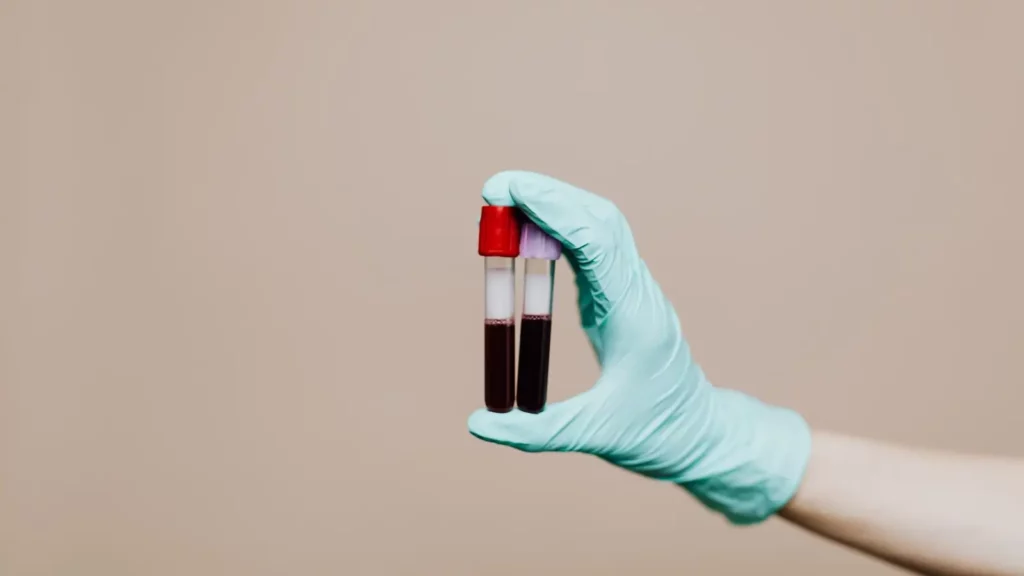
| What to check | Why | Source |
|---|---|---|
| The dates | Shedding is noticed 2 to 4 months after the trigger; linking the two needs the history | DermNet; Harrison and Sinclair 2002 |
| Hair pull test | A gentle pull brings away an increased number of hairs, mostly telogen with a typical sac | DermNet |
| Ferritin and vitamin B12 and folate | Iron, B12 and folate deficiencies are the nutritional checks listed for telogen effluvium | DermNet |
| TSH (thyroid) | Thyroid disorders are an endocrine cause to exclude | DermNet; Harrison and Sinclair 2002 |
| Platelets and hematocrit | Lower values were associated with hair loss in dengue patients; a research finding, not a screening test | Gai 2026 |
Is it the fever, the infection or the medicines?
It is hard to separate them, and the sources do not try to. StatPearls lists many drugs among the triggers of telogen effluvium (beta-blockers, retinoids, anticoagulants, immunizations), and DermNet lists weight loss, unusual diets and nutritional deficiency, all of which can accompany a long illness. Harrison and Sinclair stress that the pattern of hair loss does not identify the cause. So tell the doctor everything that changed, and do not stop a prescribed medicine on your own because of hair loss.
Does hair loss after a fever need a treatment?
In most cases no. DermNet states that regrowth usually occurs after the trigger is removed, Jimeno Ortega and Stefanato describe telogen effluvium as generally self-limited, and DermNet adds that the psychological effects of the shedding should not be ignored. Two cautions: repeated episodes of acute telogen effluvium can sometimes evolve into female pattern hair loss (DermNet), and a case report after dengue describes an acute shedding that looked like androgenetic alopecia (Starace 2023), which is why a persistent or patterned thinning deserves a dermatologist’s opinion.
Good reflexes
- Follow the shedding with a dated photo each month if there is no warning sign
- Ask for ferritin, vitamin B12, folate and TSH if it lasts
- Keep eating enough protein and calories
- See a dermatologist if shedding lasts beyond about 6 months, or if the part widens or the scalp itches, burns or shows patches
To avoid
- Buying an “after illness” hair product without a diagnosis
- Taking high doses of biotin, zinc or iron without a test
- Stopping a prescribed medicine on your own
- Assuming it is permanent baldness: most cases recover
Telogen effluvium or hereditary hair loss: how to tell them apart?
The two can look alike and can coexist: DermNet notes that telogen effluvium may unmask a genetic tendency to balding, and that chronic telogen effluvium is often confused with female pattern hair loss, which matters because the management differs. The table summarises what the sources describe; only an examination can decide.
| Feature | Telogen effluvium after an illness | Pattern hair loss (androgenetic alopecia) |
|---|---|---|
| Trigger | A trigger 2 to 3 months earlier: high fever, surgery, delivery, severe infection (French National Academy of Medicine) | No trigger needed: genetic predisposition, with androgens in men (DermNet) |
| Where | The whole scalp: diffuse thinning with no focal areas of total hair loss, short hairs of normal thickness (DermNet) | Men: receding hairline and top of the head. Women: thinning of the mid-frontal area (DermNet) |
| Course | The acute form lasts under 6 months and remits in about 95% of cases (Asghar 2020); reversible once the trigger stops (French National Academy of Medicine) | A distinct, inherited condition, managed differently (DermNet) |
| How a doctor checks | History, hair pull test, blood tests, sometimes a biopsy (Harrison and Sinclair 2002) | Examination of the pattern; hormone and thyroid tests in some women (DermNet) |
Warning signs: when not to wait
Six months is the limit for ordinary shedding, not a waiting period. These signs justify seeing a doctor earlier.
- Bald patches or areas with no hair at all: telogen effluvium is diffuse, with no focal areas of total hair loss (DermNet).
- A painful, burning or itchy scalp: scalp pain (trichodynia) can accompany telogen effluvium, but it deserves an examination (Asghar 2020).
- A widening part (women), a receding hairline (men) or thinning on top of the head: these follow the pattern of hereditary hair loss (DermNet).
- Shedding with no illness, surgery or other trigger in the previous months: the cause then has to be looked for (Harrison and Sinclair 2002).
- Shedding beyond 6 months: this is called chronic telogen effluvium and calls for a new look at the causes (Asghar 2020; Daunton 2023).
- Distress: the psychological effects of hair loss should not be ignored (DermNet).

After a fever, is a hair transplant ever the answer?
Not for the shedding itself: telogen effluvium recovers, and a transplant does not treat it. A transplant is only discussed when a separate, established hair-loss condition is confirmed after an examination. If that is your case, our guides on hair transplant for women and hair transplant for men explain the options.
What these sources do not say. None of the studies measured the effect of the fever itself, and none gives the rate of hair loss after an ordinary fever. The figures come from intensive care survivors, dengue patients and one questionnaire sent years later, so they do not apply to every infection. The 6 to 9 months comes from a dermatology reference, not from a trial, and the 95% remission figure comes from a literature review. The StatPearls, DermNet and Academy of Medicine pages are references, not trials. The decision to investigate or treat belongs to the doctor.
Hair loss after a fever: frequently asked questions
Can a fever make your hair fall out?
Yes, as telogen effluvium. Acute febrile illness is among the common triggers listed by StatPearls and DermNet. The hair falls weeks later, not during the fever.
How long after a fever does hair fall out?
Usually 2 to 4 months after the illness (DermNet), or 3 to 4 months in Malkud’s review. That delay is why many people do not connect the two.
How long does hair loss after a fever last?
DermNet describes shedding that peaks and then tapers back to normal over 6 to 9 months in most cases. Recovery may be incomplete in some people.
Will my hair grow back after a fever?
In most cases yes: regrowth usually occurs once the trigger has gone, and telogen effluvium does not cause complete baldness (DermNet).
Does a high fever matter more than a mild one?
None of the sources we read compares fever levels, so we cannot give a threshold. What is documented is that severe infection, sepsis and intensive care stays are associated with more hair loss.
Which infections cause hair loss?
StatPearls lists acute febrile illness and severe infection as triggers in general. Studies document hair loss after sepsis in intensive care and after dengue; the COVID-19 data are in their own guide.
Does sepsis cause hair loss?
Among 123 intensive care survivors in Wales, 44 (36%) reported hair loss at 3 months, and sepsis or septic shock was the only risk factor found (odds ratio 5.1, interval 2.1 to 12.4).
Does dengue cause hair loss?
It is reported: in a hospital of 1,302 dengue patients, 15 (about 1.15%) had hair loss, mostly women and mostly during convalescence. In a Vietnamese follow-up, hair loss often persisted at 3 months.
Why do women report it more often?
In the dengue series, 93.33% of the patients with hair loss were women. Women may also consult more often, so this does not prove a higher biological risk.
What tests should I ask for?
A doctor’s history and a blood check: ferritin, vitamin B12, folate and TSH, as listed by DermNet. The dates of the illness matter as much as the blood tests.
When should I see a doctor?
If shedding lasts beyond about 6 months, if the part or temples thin, if the scalp itches, burns or has patches, or if the loss is very distressing.
Is there a treatment?
Most cases need none: regrowth usually follows once the trigger is gone. Persistent or patterned thinning should be examined by a dermatologist, because it can be another condition.
How can I tell hair loss after an illness from genetic hair loss?
Telogen effluvium is diffuse, follows a trigger by 2 to 3 months and is reversible once the trigger stops, while pattern hair loss follows a recognisable pattern (receding hairline and top of the head in men, mid-frontal thinning in women) and needs no trigger. The two can coexist, so only an examination can tell.
What does hair regrowth look like after a fever?
A fine fringe of short new hairs, often at the front, as new hair pushes out the resting ones (DermNet; Asghar 2020). Density then thickens back to normal over 6 to 9 months in most cases, and recovery may be incomplete in some.
Should I wait six months before seeing a doctor?
Not if there are warning signs: bald patches, a painful or burning scalp, a widening part or receding hairline, shedding with no trigger, or heavy distress. Six months is the limit for ordinary shedding, not a waiting period.
Is it the same as hair loss after COVID-19?
The mechanism is the same (telogen effluvium after a trigger), but COVID-19 has its own studies and timelines, which are in our separate guide on hair loss after COVID.
Key takeaways
Hair loss after a high fever or severe infection is usually telogen effluvium: it appears 2 to 4 months after the illness, not during it, and most cases taper back to normal over 6 to 9 months. In 123 intensive care survivors, 36% reported hair loss at 3 months and sepsis was the only risk factor found (odds ratio 5.1). The useful step is a history and a check of ferritin, B12, folate and thyroid, not a supplement; see a doctor if shedding lasts beyond about 6 months or the thinning follows a pattern.
This article is general information and does not replace a medical consultation. See a doctor for sudden or persistent hair loss, and do not start supplements or treatments without advice.
Sources
- Hughes E. C., Syed H. A., Saleh D., Telogen effluvium, StatPearls, 2024 · PMID 28613598
- Malkud S., Telogen effluvium: a review, J Clin Diagn Res, 2015;9:WE01-WE03 · PMID 26500992
- Harrison S., Sinclair R., Telogen effluvium, Clin Exp Dermatol, 2002;27:389-395 · PMID 12190639
- Jimeno Ortega I., Stefanato C. M., Telogen effluvium: a 360 degree review, Ital J Dermatol Venerol, 2023;158:457-466 · PMID 38015483
- Battle C. E. et al., Incidence and risk factors for alopecia in survivors of critical illness: a multi-centre observational study, J Crit Care, 2019;50:31-35 · PMID 30471558
- Gai Z. et al., Low platelet count and hematocrit as risk factors for alopecia in dengue fever: a retrospective analysis, Am J Trop Med Hyg, 2026;114:170-173 · PMID 41218211
- Tam D. T. H. et al., Burden of postinfectious symptoms after acute dengue, Vietnam, Emerg Infect Dis, 2023;29:160-163 · PMID 36573590
- Henriques P. et al., Primary dengue and long-term health status in Madeira Island, Portugal: a retrospective questionnaire-based study, Am J Trop Med Hyg, 2024;111:403-411 · PMID 38955194
- Starace M., Piraccini B. M., Evangelista V., Acute telogen effluvium due to dengue fever mimicking androgenetic alopecia, Ital J Dermatol Venerol, 2023;158:66-67 · PMID 36939507
- Daunton A., Harries M., Sinclair R., Chronic telogen effluvium: is it a distinct condition? A systematic review, Am J Clin Dermatol, 2023;24:513-520 · PMID 37052778
- DermNet NZ, Telogen effluvium
- French National Academy of Medicine, Medical dictionary, entry “effluvium télogène”
- Asghar F. et al., Telogen effluvium: a review of the literature, Cureus, 2020;12:e8320 · PMID 32607303
- DermNet NZ, Female pattern hair loss
- DermNet NZ, Male pattern hair loss
- Sources consulted in November 2026.
Medi’Go organises cosmetic surgery stays in Tunisia: partner clinics, airport pick-up, and follow-up before and after the procedure.
Reviewed by Dr Beya Bouricha, physician trained in hair transplantation and anti-ageing medicine
Read also
Hair loss that persists? Have it assessed
Talk to your doctor or a dermatologist first. If a transplant is ever considered, a Medi’Go adviser replies in French, with no obligation.