Published on · Updated on
Androgenetic alopecia: DHT, heredity and why people go bald

Contents
- Hereditary or temporary hair loss: how to tell them apart?
- What happens in the follicle: DHT and miniaturisation
- Heredity: what genes say, and what they do not
- Men and women: two profiles, not exactly the same disease
- Treatments with evidence
- Before starting a treatment: what the doctor checks
- And a hair transplant in androgenetic alopecia?
- Androgenetic alopecia: frequently asked questions
- Key takeaways
Common baldness is not hair shedding: it is the miniaturisation of follicles under the effect of DHT in genetically sensitive people. Genes, men and women, treatments with evidence, and how to tell it from temporary shedding.
 By the Medi’Go team · · Reviewed by Dr Beya Bouricha
Androgenetic alopecia, or hereditary baldness, is a progressive thinning of the hair: follicles in the susceptible areas (front, mid-scalp and crown) miniaturise and end up producing ever finer hairs, then none (Liu 2025). In men, androgens, mainly DHT, are thought to act on genetically sensitive follicles; in women the molecular mechanism remains unknown (Liu 2025). It is not a sudden shedding: it is a chronic disease that advances, and it is treated better the earlier it is seen.
This page is the reference guide of our hair loss series. It explains what happens in the follicle, the role of heredity, the differences between men and women, and the treatments with evidence. Temporary shedding (after a fever, COVID, an operation, dieting, weight-loss surgery) and hormonal causes (menopause, PCOS, thyroid, adolescence) each have their own page: we mention them here so you can tell them apart.
Hereditary or temporary hair loss: how to tell them apart?
This is the first question, because the two are not treated the same way. In telogen effluvium, a trigger makes a lot of hair fall at once, 2 to 4 months later, and it returns in 6 to 9 months in most cases (DermNet NZ). In androgenetic alopecia there is no trigger: the hair thins little by little in specific areas (Liu 2025). The two can coexist: a trigger can reveal a hereditary baldness that was until then discreet.
| Temporary shedding (telogen effluvium) | Androgenetic alopecia | |
|---|---|---|
| Onset | Within 2 to 4 months after a trigger (DermNet NZ) | Gradual, no trigger; age varies (Liu 2025) |
| Look | Diffuse shedding, hair in the brush, thinning everywhere (DermNet NZ) | Thinning at the front, mid-scalp and crown; ever finer hairs (Liu 2025) |
| Course | Returns to normal in 6 to 9 months in most cases (DermNet NZ) | Chronic and progressive if untreated (Liu 2025) |
| Pages to read | fever, COVID, operation, dieting, weight-loss surgery | menopause, PCOS, adolescence |
What happens in the follicle: DHT and miniaturisation
DHT is made from testosterone by an enzyme, 5-alpha reductase; according to DermNet NZ, male pattern baldness comes from a genetic sensitivity of some scalp areas to the effects of DHT.
According to DermNet NZ, DHT shortens the growth (anagen) phase from a usual 3 to 6 years to a few weeks or months.
Follicles miniaturise: they gradually produce fewer and finer hairs, down to vellus hairs (Ellis 2002; van Zuuren 2016).
Follicles at the back of the head, resistant to androgens, are the ones taken for a hair transplant (Liu 2025).
Several observations point to DHT: eunuchs, who have low androgens, and men with a genetic 5-alpha reductase deficiency, who have low DHT, led to making it a key player; and finasteride, which blocks conversion to DHT, improves hair growth in men (Kaufman 2002). The same author notes that scalp hair grows without androgens, whereas body hair depends on them: baldness is therefore a particular sensitivity of certain follicles, not an excess of hormones in everyone.
Heredity: what genes say, and what they do not
Androgenetic alopecia is polygenic: many genes determine the predisposition (Lolli 2017). Two areas have stood out for a long time: the AR/EDA2R locus on the X chromosome, which contains the androgen receptor gene, and the 20p11 locus, whose association is highly significant (Lolli 2017; Hillmer 2008). Hillmer and colleagues found no interaction between this second locus and the AR locus, which suggests an androgen-independent pathway (Hillmer 2008). Genome-wide association studies have since found more than 380 associated regions (Liu 2025). A meta-analysis of 8 studies found a higher risk with the G allele of an AR gene variant (odds ratio 2.68), mainly in white populations, but no association with the CAG and GGC repeats (Zhuo 2012).
| Common belief | What the sources show |
|---|---|
| “Baldness comes from your mother” | Baldness is passed down from both sides: the genes are many and can come from both parents (DermNet NZ). In men, a father’s hair loss raises the risk (× 2.5), alone or together with that of the mother or maternal grandfather (Chumlea 2004). |
| “A genetic test tells me whether I will lose my hair” | For female pattern hair loss, DermNet NZ states that genetic testing is not recommended, because it is unreliable; the inheritance is polygenic and cannot be read from a single gene. |
| “It is an excess of testosterone” | Most affected women have normal androgen levels in the blood (DermNet NZ); in men it is the sensitivity of the follicles that counts (Kaufman 2002). |
| “It is only a male problem” | Follicles at the front, mid-scalp and crown are susceptible in men after puberty and in women after menopause, and more rarely in premenopausal women and adolescents (Liu 2025). |
You do not inherit baldness: you inherit a sensitivity of the follicles, and a timetable.
Men and women: two profiles, not exactly the same disease
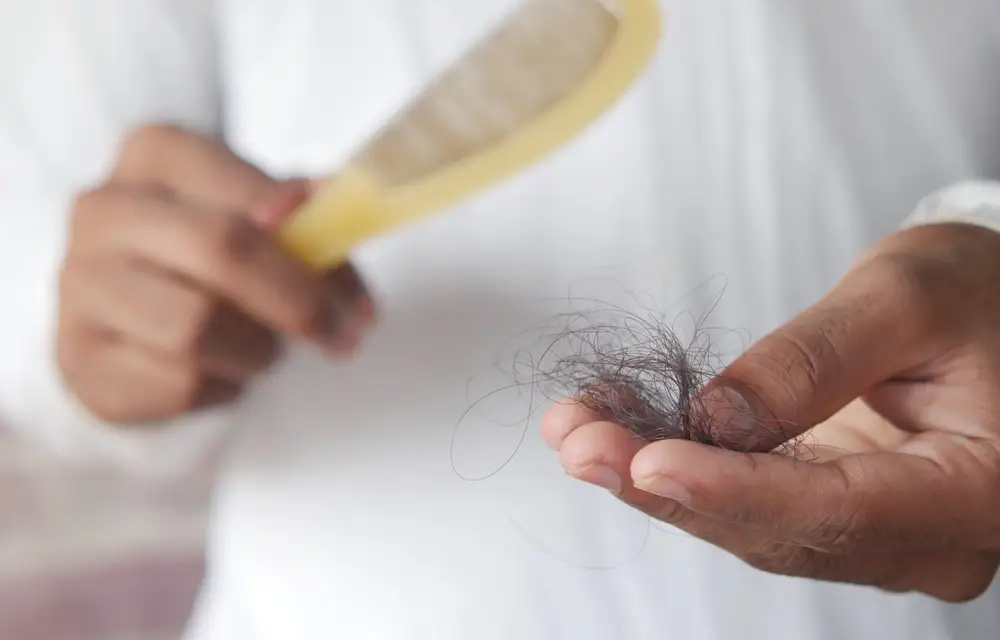
In men, receding temples and a thinning crown are the classic signs, and DHT is the accepted mechanism. In women, androgenetic alopecia shows as a progressive thinning, often with the frontal hairline preserved (van Zuuren 2016). Its mechanism is poorly understood: it is not well known whether androgens play a role, most patients having normal levels (DermNet NZ; Ong 2025). Proof of this difference: finasteride, effective in men, gave no benefit in affected postmenopausal women (Kaufman 2002). Frequency rises with age: 52.2% of 178 postmenopausal women aged 50 to 65 had it, mostly grade I (Chaikittisilpa 2022). When androgen excess is behind it in a young woman, the page PCOS and hair loss details the work-up.
Treatments with evidence
| Treatment | What studies show | Limits and precautions |
|---|---|---|
| Topical minoxidil | In women, a Cochrane review of 47 trials finds more regrowth with minoxidil than placebo (risk ratio 1.93 on patients’ ratings) (van Zuuren 2016). It is the only treatment approved by the FDA for female pattern hair loss (Ong 2025). | DermNet NZ advises continuing at least 6 months before judging, and long-term treatment is generally needed to keep the benefit. |
| Low-dose oral minoxidil | In a 24-week trial in 90 men, 5 mg a day by mouth was not superior to topical minoxidil 5% twice a day (Penha 2024). | Off-label (DermNet NZ); hypertrichosis in 22 of 45 patients and headache in 6 of 45 in the trial (Penha 2024). |
| Finasteride (1 mg) | Two one-year trials in 1,553 men aged 18 to 41: +107 hairs (1 year) and +138 (2 years) in a 5.1 cm² area of the crown compared with placebo, which kept losing hair (Kaufman 1998). Over 5 years, 99.4% of 801 Japanese men were rated improved on photographs, less so if baldness was advanced or treatment began after age 40 (Yoshitake 2015, open study). | Ineffective in postmenopausal women (Kaufman 2002); sexual and psychiatric effects to discuss (see below). |
| Dutasteride | A network meta-analysis of 23 studies ranks 0.5 mg a day first for total hair count at 24 weeks, ahead of finasteride 1 mg (+7.1 hairs/cm²) (Gupta 2022). | The ranking varies with dose, end point and duration; data more limited than for finasteride. |
| Oral antiandrogens (women) | Some efficacy according to a 2025 review (Ong 2025); DermNet NZ cites the combination of oral minoxidil 2.5 mg and spironolactone 25 mg. | Side effects and contraindications, including the need for contraception (Ong 2025). |
| Hair transplant | Transplanting follicles from the back of the head, resistant to androgens: an effective treatment (Liu 2025). | A surgical act: in 21 observational studies, 442 of 2,353 patients reported complications, mostly pain (Khatib 2025). |
| Low-level laser | DermNet NZ judges its benefit in baldness unproven. | Efficacy not demonstrated. |
Reading the table: the figures come from different trials, with different doses and end points, and cannot be compared directly. What they share is that no treatment cures: they slow the loss and sometimes regrow hair while they are taken (DermNet NZ). And there is no consensus algorithm for choosing between them; only 3 of the 30 studies in a review of surgical and non-surgical treatments used a patient-reported outcome (Rosati 2019).
Two precautions weigh in the decision. First, a meta-analysis of 15 controlled trials (4,495 subjects) found a 1.57-fold risk of sexual dysfunction with 5-alpha reductase inhibitors: 1.66 for finasteride and 1.37 for dutasteride (not significant) (Lee 2019). Second, a 2021 systematic review found an association between finasteride and depressive symptoms (odds ratio 2.14), and reports of persistent problems after stopping; these data are observational and mix several indications, so they show an association, not a cause (Pompili 2021). These effects are discussed with the doctor before starting.
Before starting a treatment: what the doctor checks
- Confirm the diagnosis by examination and, if needed, trichoscopy: a recent diffuse shedding is not treated like baldness (Liu 2025).
- Rule out an associated temporary shedding: fever, operation, dieting, iron deficiency, thyroid (DermNet NZ).
- In women, look for signs of androgen excess (irregular periods, acne, body hair) and think of PCOS (Ong 2025).
- Talk about expectations: treatments need at least 6 months to be judged, and the benefit lasts only while they are taken (DermNet NZ).
- Discuss side effects (sexual, psychiatric, hypertrichosis) and contraception in women who could have children (Lee 2019; Ong 2025).
- Start early: treatment begun sooner, before baldness is advanced, gives better results in the 5-year Japanese study (Yoshitake 2015).
And a hair transplant in androgenetic alopecia?
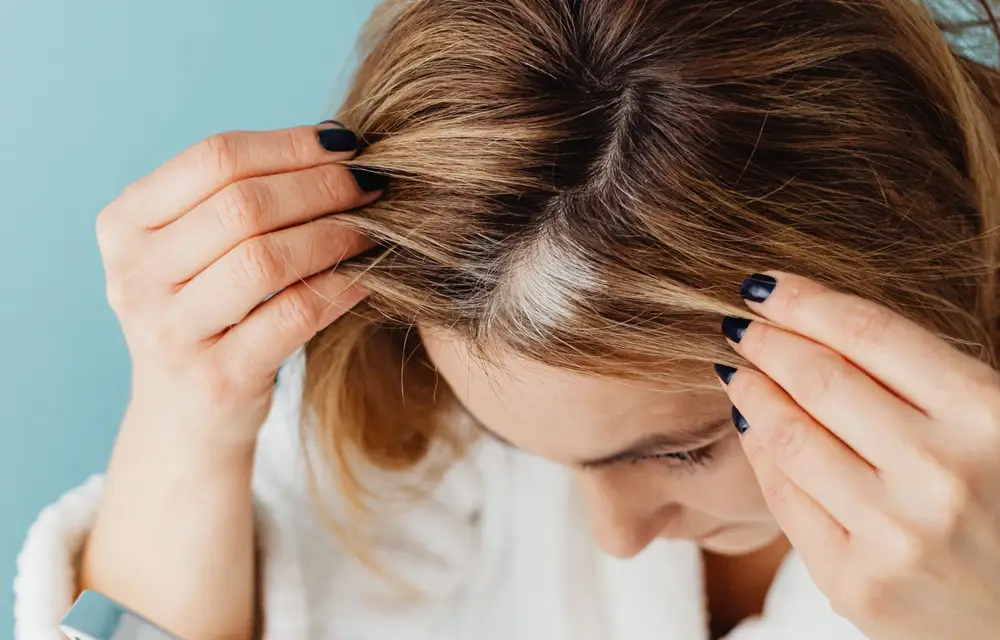
A transplant moves follicles from the back of the head, resistant to androgens, to the bare areas: it is an effective treatment of androgenetic alopecia (Liu 2025). But it is a surgical act with possible complications (Khatib 2025), and it is discussed once the loss is established, after a proper diagnosis and medical treatment. Our pages detail hair transplant for men and hair transplant for women in Tunisia: who it suits, which technique, and what results.
What these sources do not say. No study establishes the baldness risk of a given person: the known genes explain only part of the disease and genetic testing is not recommended. Frequency figures come mostly from white populations, and the frequency varies widely between populations. Treatment comparisons rest on short trials with different end points. The 5-year Japanese study had no control group. The decision to treat belongs to the doctor.
Androgenetic alopecia: frequently asked questions
What is androgenetic alopecia?
It is a progressive thinning of the hair through miniaturisation of follicles at the front, mid-scalp and crown, in genetically sensitive people (Liu 2025). It is also called common or hereditary baldness.
What is DHT?
Dihydrotestosterone is an androgen made from testosterone by 5-alpha reductase; according to DermNet NZ, the genetic sensitivity of some follicles to its effects is the cause of male pattern baldness, because it shortens the growth phase of the hair.
Does baldness come from the mother?
Not only: it can come from both sides (DermNet NZ), and in men a father’s hair loss raises the risk (× 2.5) (Chumlea 2004).
Can a genetic test tell if I will go bald?
Not reliably: genetic testing is not recommended to assess baldness risk (DermNet NZ), and the disease is polygenic (Lolli 2017).
At what age does it start?
The age of onset is variable (Liu 2025). It can start in adolescence, although its frequency at that age is unknown: see our page on hair loss in teenagers.
Can women have androgenetic alopecia?
Yes, and it is the most common form of hair loss in women (van Zuuren 2016). It shows as diffuse thinning, often with the frontal hairline preserved.
How does it differ from temporary hair loss?
Temporary shedding follows a trigger by 2 to 4 months and returns in 6 to 9 months in most cases (DermNet NZ); androgenetic alopecia is progressive, with no trigger (Liu 2025).
Can baldness be stopped?
It can be slowed, sometimes with regrowth, with minoxidil or finasteride, but the benefits last only while treatment continues (DermNet NZ).
What is the best treatment?
There is no consensus algorithm (Rosati 2019). Trials rank minoxidil, finasteride and dutasteride differently depending on dose and end point (Gupta 2022), and the choice is made with a doctor.
Is oral minoxidil more effective than topical minoxidil?
In a 24-week trial in 90 men, 5 mg a day as a tablet was not superior to the 5% solution, with hypertrichosis in 22 of 45 patients (Penha 2024). It remains off-label (DermNet NZ).
Does finasteride have side effects?
A meta-analysis finds a 1.57-fold risk of sexual dysfunction with 5-alpha reductase inhibitors (Lee 2019), and a review found an association with depressive symptoms (Pompili 2021). They are discussed before starting.
Does finasteride work in women?
Not in postmenopausal women with female pattern hair loss, according to a trial described by Kaufman (2002); in women, the validated treatment is topical minoxidil (Ong 2025).
Does a hair transplant cure baldness?
It moves resistant follicles to the bare areas, which is an effective treatment (Liu 2025), but it is a surgical act with possible complications (Khatib 2025).
Key takeaways
Androgenetic alopecia is a progressive miniaturisation of follicles at the front, mid-scalp and crown, under the effect of androgens, mainly DHT, in genetically sensitive people. Heredity is polygenic and comes from both sides. In women the mechanism remains poorly known. Minoxidil and finasteride have evidence, but they slow the loss without curing and carry precautions; a transplant moves resistant follicles. A recent diffuse shedding is another story: see a doctor before concluding it is baldness.
This article is general information and does not replace a medical consultation. Diagnosis and the choice of treatment belong to a doctor or dermatologist: do not start a drug without advice.
Sources
- Liu Y., Tosti A., Wang E. C. E. et al., Androgenetic alopecia, Nat Rev Dis Primers, 2025;11:73 · PMID 41068174
- Lolli F., Pallotti F., Rossi A. et al., Androgenetic alopecia: a review, Endocrine, 2017;57:9-17 · PMID 28349362
- Ellis J. A., Sinclair R., Harrap S. B., Androgenetic alopecia: pathogenesis and potential for therapy, Expert Rev Mol Med, 2002;4:1-11 · PMID 14585162
- Kaufman K. D., Androgens and alopecia, Mol Cell Endocrinol, 2002;198:89-95 · PMID 12573818
- Hillmer A. M., Brockschmidt F. F., Hanneken S. et al., Susceptibility variants for male-pattern baldness on chromosome 20p11, Nat Genet, 2008;40:1279-1281 · PMID 18849994
- Zhuo F. L., Xu W., Wang L. et al., Androgen receptor gene polymorphisms and risk for androgenetic alopecia: a meta-analysis, Clin Exp Dermatol, 2012;37:104-111 · PMID 21981665
- Chumlea W. C., Rhodes T., Girman C. J. et al., Family history and risk of hair loss, Dermatology, 2004;209:33-39 · PMID 15237265
- Chaikittisilpa S., Rattanasirisin N., Panchaprateep R. et al., Prevalence of female pattern hair loss in postmenopausal women: a cross-sectional study, Menopause, 2022;29:415-420 · PMID 35357365
- van Zuuren E. J., Fedorowicz Z., Schoones J., Interventions for female pattern hair loss, Cochrane Database Syst Rev, 2016;CD007628 · PMID 27225981
- Ong M. M., Avram M., McMichael A., Antiandrogen therapy for the treatment of female pattern hair loss: a clinical review of current and emerging therapies, J Am Acad Dermatol, 2025;93:749-760 · PMID 40345536
- Kaufman K. D., Olsen E. A., Whiting D. et al., Finasteride in the treatment of men with androgenetic alopecia, J Am Acad Dermatol, 1998;39:578-589 · PMID 9777765
- Yoshitake T., Takeda A., Ohki K. et al., Five-year efficacy of finasteride in 801 Japanese men with androgenetic alopecia, J Dermatol, 2015;42:735-738 · PMID 25903108
- Gupta A. K., Venkataraman M., Talukder M. et al., Relative efficacy of minoxidil and the 5-α reductase inhibitors in androgenetic alopecia treatment of male patients: a network meta-analysis, JAMA Dermatol, 2022;158:266-274 · PMID 35107565
- Penha M. A., Miot H. A., Kasprzak M. et al., Oral minoxidil vs topical minoxidil for male androgenetic alopecia: a randomized clinical trial, JAMA Dermatol, 2024;160:600-605 · PMID 38598226
- Lee S., Lee Y. B., Choe S. J. et al., Adverse sexual effects of treatment with finasteride or dutasteride for male androgenetic alopecia: a systematic review and meta-analysis, Acta Derm Venereol, 2019;99:12-17 · PMID 30206635
- Pompili M., Magistri C., Maddalena S. et al., Risk of depression associated with finasteride treatment, J Clin Psychopharmacol, 2021;41:304-309 · PMID 33814544
- Khatib M., Skorochod R., Wolf Y. et al., Complications following hair transplantation: a systematic literature review and meta-analysis, Aesthetic Plast Surg, 2025;49:6393-6405 · PMID 40913181
- Rosati P., Barone M., Alessandri Bonetti M. et al., A systematic review of outcomes and patient satisfaction following surgical and non-surgical treatments for hair loss, Aesthetic Plast Surg, 2019;43:1523-1535 · PMID 31451851
- DermNet NZ, Male pattern hair loss
- DermNet NZ, Female pattern hair loss
- DermNet NZ, Telogen effluvium
- Sources consulted in November 2026.
Medi’Go organises cosmetic surgery stays in Tunisia: partner clinics, airport pick-up, and follow-up before and after the procedure.
Reviewed by Dr Beya Bouricha, physician trained in hair transplantation and anti-ageing medicine
Read also
Hair loss that persists? Have it assessed
Talk to your doctor or a dermatologist first. If a transplant is ever considered, a Medi’Go adviser replies in French, with no obligation.