Scar from an FUT transplant
A fine line without hair, at the back or side of the head, left by the removal of a strip: it is camouflaged by implanting follicles in it.
Scar transplant · Tunis · for patients from France, Belgium and Switzerland
A line without hair after an FUT transplant, a surgical, facelift, accident or burn scar: implanting your own hair can camouflage it. The follicles are placed one by one in and around the scar, under local anaesthetic, by a specialist doctor, in a private clinic in Tunis. Price set on a quote after your photos, all-inclusive on site, with a single adviser who replies in your language.
Your situation
Six common origins of scalp scars, and what is generally suggested. The decision is made with the doctor, after studying your photos.
A fine line without hair, at the back or side of the head, left by the removal of a strip: it is camouflaged by implanting follicles in it.
After scalp surgery (tumour, cyst, neurosurgery), the scar remains visible and bare: implantation masks it, once the scar is well stabilised.
A wound, a blow or a burn leaves an area where hair no longer grows. The doctor judges whether the tissue can receive follicles.
Around the temples and behind the ears, a facelift scar can thin the hairline: it is redrawn.
Small visible dots after an FUE transplant or an over-harvested donor area: they are camouflaged by targeted densification.
A scar in the beard or eyebrow is treated with the same technique: see the beard transplant and eyebrow transplant pages.
Techniques
For a scar, the follicles are harvested then placed one by one, with particular care. The doctor chooses the technique after assessing your photos.
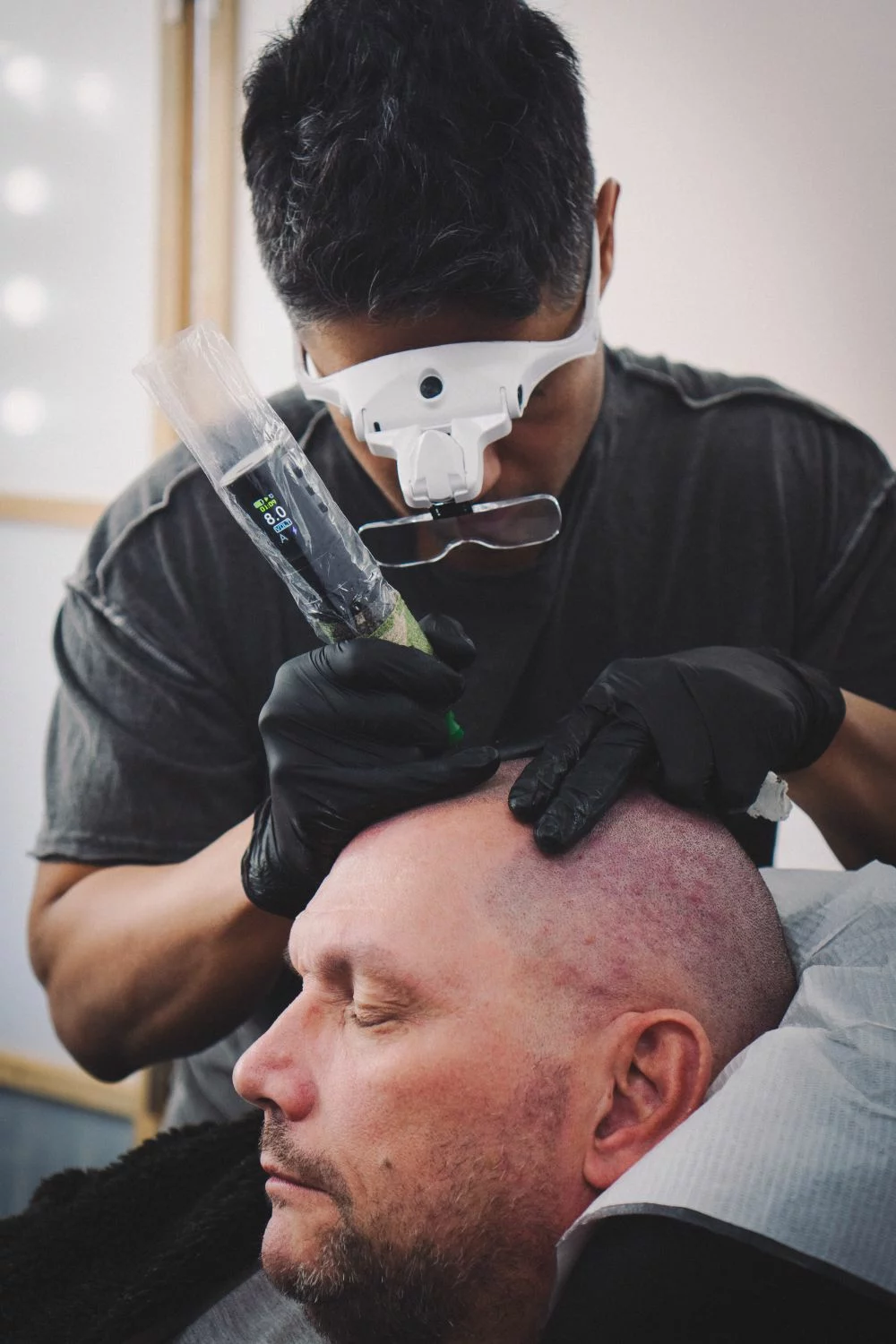
The follicles are harvested one by one, with a micro-punch, from the donor area, then implanted in and around the scar. The harvesting points are barely visible.
The follicles are implanted directly with an implanter pen, which controls the angle and direction of each hair: an asset for following the line of a fine scar.
Scar tissue has a poorer blood supply than normal skin: some of the follicles may grow less well, and a second session is sometimes suggested.
Indicative comparison: the choice is made with the doctor, from your photos.
The principle
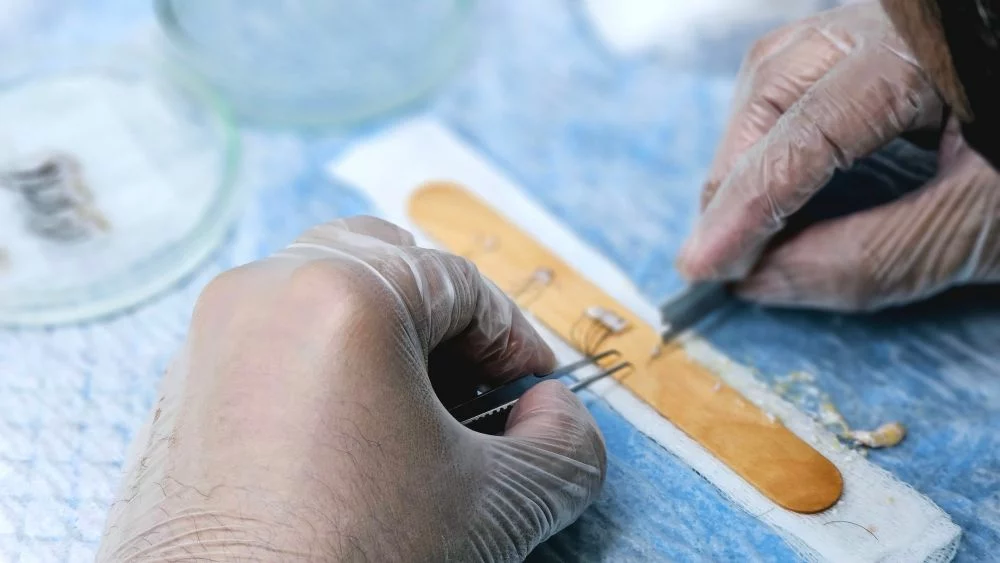
Scar transplant moves your own follicles from an area that has reserves to the scar, one by one, following the angle and direction of the neighbouring hair. The visible line blends into the rest of the hair.
For whom?
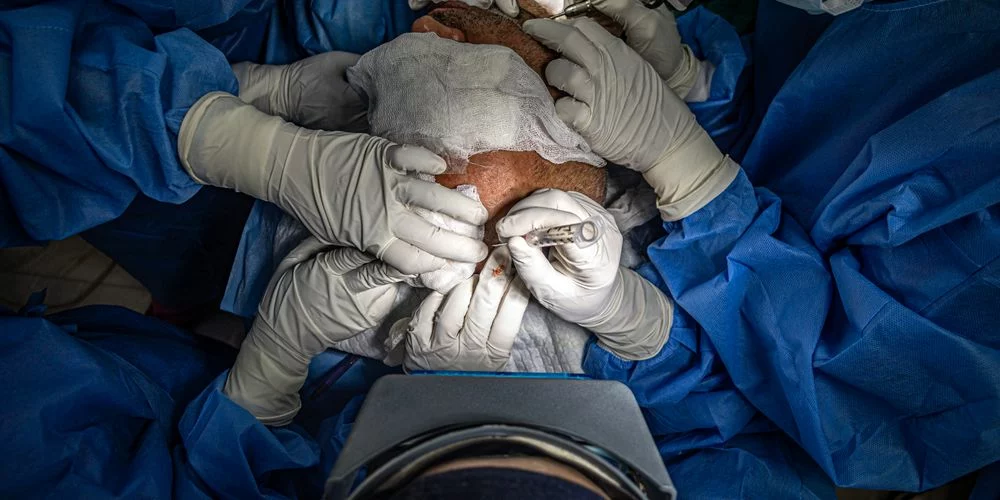
Not all scars are suitable for transplant. The doctor decides with you, from your photos then in consultation.
Pricing
Each price includes the operation, the private clinic, the hotel and transfers. The flight is extra. The exact price is confirmed on a quote, after your photos. See also the all prices.
The number of follicles, and therefore the price, depends on the length and width of the scar: the doctor quantifies it from your photos. As a guide, a one-session hair transplant is offered from €1,500 to €2,000, see the male hair transplant page.
The procedure
A scar transplant takes place in four stages, under local anaesthetic.
The doctor examines the scar (length, width, suppleness) and the donor area, then plans the implantation with you.
The follicles are harvested one by one from the donor area, respecting the density of that area.
The follicles are placed one by one in and around the scar, with the angle and direction of the neighbouring hair, for natural camouflage.
Scalp care, written instructions (washing, sun, sleep) and a check before you leave.
After the procedure
Redness and small scabs are normal on the transplanted area. Follow the washing instructions and avoid scratching.
The transplanted hair falls out: this is a normal stage of the process, before regrowth.
The new hair appears little by little. On a scar, regrowth can be slower.
The density stabilises. The final result is judged at around one year, and a complementary session is sometimes discussed.
Indicative durations: the doctor gives you written instructions adapted to your case.
Safety
A transplant is a medical procedure, not a package sold on a production line: here is the list before you choose.
The transplant is performed by a specialist doctor, not delegated to a non-medical team.
The doctor judges the suppleness and condition of the scar tissue before proposing a transplant, and tells you frankly whether it is relevant.
Camouflage, not a promise of perfect hair: we explain what is possible on your scar.
A private clinic in Tunis, with a medical environment and post-procedure monitoring.
Washing, sun, sleep, return to sport: everything is noted, week by week.
You write to your adviser on WhatsApp, in your language. They coordinate with the clinic.
What the price includes
For the quote
Clean scalp, scar clearly visible, hair parted, in daylight, without filters. They stay confidential: only the medical team sees them.
Your scar quote · 2 minutes
Fill in your details and expectations. The doctor then studies your photos and your adviser replies on WhatsApp, in your language.
Frequently asked questions
Another question? Write to us on WhatsApp, we reply in your language.
Ask my questionOften yes: follicles can be implanted in and around a scar to camouflage it. The result depends on the condition of the scar tissue, which the doctor assesses from your photos and then in consultation.
The price is set on quote : it depends on the length and width of the scar, and therefore on the number of follicles. It is all-inclusive on site (doctor, clinic, hotel, transfers), the flight extra. As a guide, a one-session hair transplant is offered from €1,500 to €2,000.
You need to wait until the scar is well stabilised, often several months or even a year, depending on its origin. The doctor gives the appropriate timeframe.
No, not always: scar tissue has a poorer blood supply, so some follicles may grow less well. A second session is sometimes suggested.
The transplant is done under local anaesthetic : the area is numbed. The doctor explains what to expect afterwards.
The transplanted hair falls out after a few weeks, then regrowth starts around the 3rd or 4th month, sometimes more slowly on a scar. The final result is judged at around 12 months.
Yes, it is a frequent request: implanting follicles into the fine line left by the strip makes it much less visible.
Sometimes, if the tissue is supple and stabilised enough. The doctor judges from your photos and may suggest a test or a transplant in several stages.
Yes: an active inflammatory scar, very fibrous tissue or an insufficient donor area may rule it out. The doctor says so frankly before any commitment.
Yes, the same technique applies. See the pages beard and moustache transplant and eyebrow transplant.
Allow a few days on site, with a check before you leave. The doctor confirms the exact duration.
A few photos: a close-up of the scar, front, side and back of the head, in daylight, without filters. They are confidential. Send them on WhatsApp after the form. For a standard transplant, see the page male hair transplant.
Scar transplant in Tunisia
Free and confidential assessment. All-inclusive price on site, confirmed before you leave.
Read also
